A better way to give students more debate reps between coaching classes.

DebateBoost helps middle and high school debaters practice independently, receive structured feedback, and prepare more effectively for rounds without increasing the coach's live workload.

  • Built for grades 6-12
  • Feedback aligned to real debate evaluation categories
  • Designed for between-class practice and in-class use
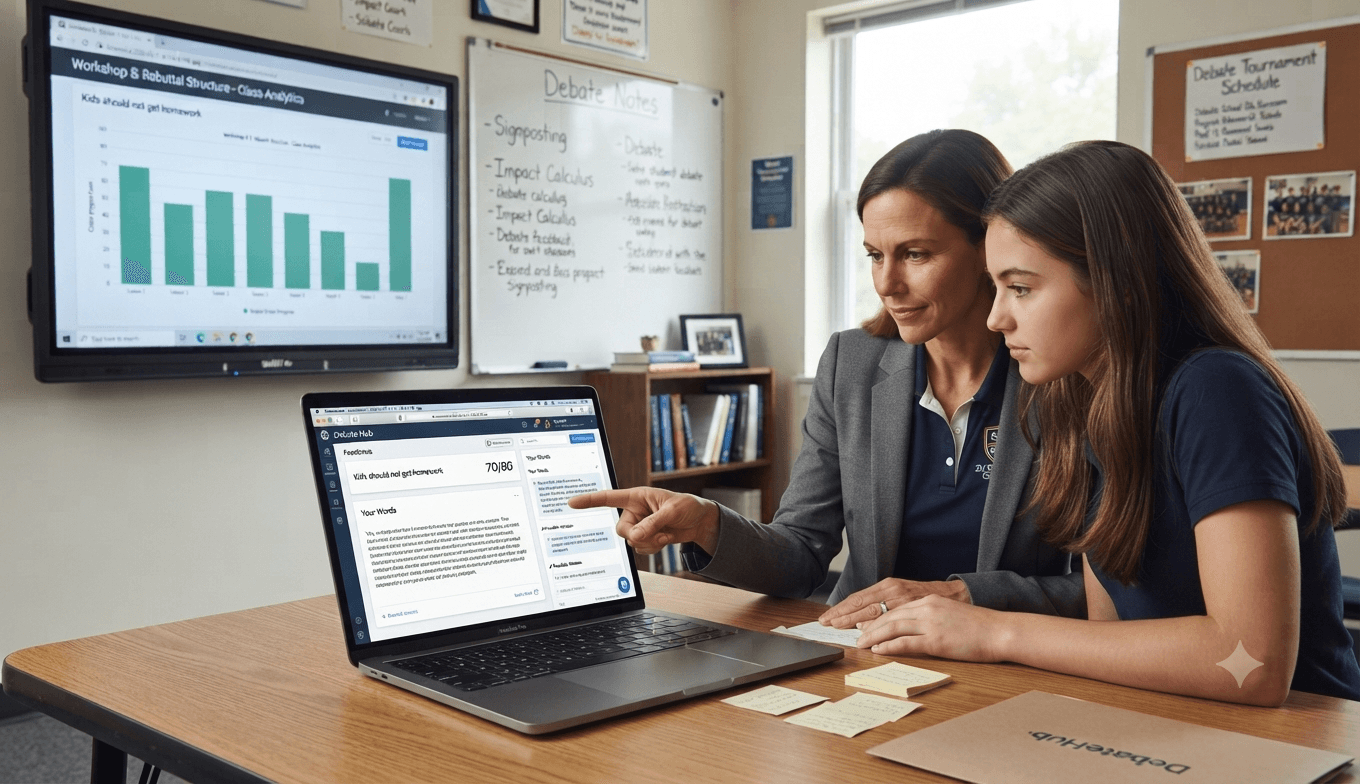
A debate coach reviewing DebateBoost feedback with a student.

Students need more reps than most teams can provide live.

Even strong programs have limited class time. Students often need extra practice with speech structure, rebuttal, clarity, and strategic decision-making, but coaches cannot personally run every rep outside coaching or practice classes.

Limited live time

Not every student gets enough repetitions in class.

Uneven feedback

Students often leave practice knowing they struggled but not knowing why.

Wide skill ranges

Beginners and experienced students need different levels of support.

Structured practice students can do on their own.

DebateBoost gives students repeatable practice tasks that connect to the skills they use in actual rounds.

Skill-based practice

Students can work on openings, rebuttals, clash, weighing, and delivery.

Judge-style feedback

Feedback reflects real debate evaluation dimensions rather than generic writing suggestions.

Between-class reinforcement

Students can get reps outside scheduled practice classes without needing constant coach availability.

AI judge potential

Facilitators can use AI-based judging workflows to support classroom drills and practice rounds.

Why coaches can trust it

Built around how debate is actually evaluated.

DebateBoost feedback should feel recognizable to coaches because it maps to core judging dimensions used in debate evaluation: clarity and delivery, argument quality, responsiveness, and strategic decision-making.

Argument quality

Is the claim clear, supported, and logically developed?

Responsiveness

Does the student directly answer and weaken opposing material?

Clarity and delivery

Is the speech understandable, organized, and easy to follow?

Strategic decision-making

Is the student choosing what to prioritize, extend, and weigh?

A DebateBoost feedback screen showing a judge note, rubric areas, and focused drills.
A debate facilitator helping students practice with DebateBoost in a classroom.
Program fit

Where it fits in a program.

  • Between coaching classes for additional student reps
  • Before tournaments to reduce panic and increase readiness
  • For newer debaters who need lower-pressure practice
  • In classrooms or workshops where facilitators want fast feedback loops
  • As a future AI judge workflow for in-class drills and informal rounds

Questions coaches usually have

Is this meant to replace coaches?

No. It is meant to extend practice between live coaching touchpoints.

Is the feedback generic?

It should feel grounded in debate-specific evaluation, not broad motivational coaching.

Can beginners use it?

Yes. It is particularly helpful for students who need more confidence and repetition before performing live.

How should teams use it?

Best as a between-class practice layer, tournament prep layer, and support tool for students who need more reps than live classes can provide.

Give students more practice without adding more classes.

Book a demo